
Your questions, answered
Everything you need to know before your first visit, from what treatment feels like to how to care for your skin afterward.
What is the first visit like?
Your first visit is a relaxed free consultation, followed by a short treatment time. We'll talk about the areas you want treated and review your health history, including any medications or conditions that could cause us to pause treatment. We'll explain what electrolysis is and how it works, and map out a realistic plan and timeline.
We will then perform a short treatment, so you can feel what it's like and see that it works, before discussing your treatment plan. Consultation time ranges from 30–45 minutes, with about 10–15 minutes of treatment. The consultation is free, including the short treatment time at the end.
Is electrolysis painful?
Most clients describe it as a quick pinch of heat, or a sensation like a tiny zap — noticeable, but very manageable. Comfort varies by person and by area: the upper lip and bikini line tend to be more sensitive than the chin, legs, or underarms.
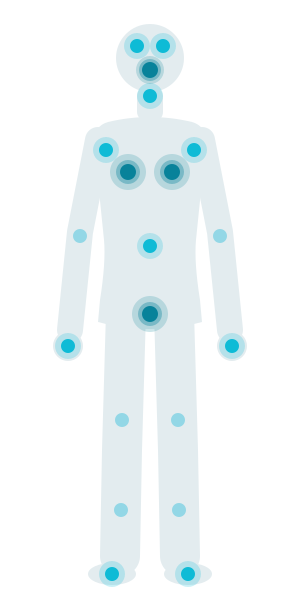
Typical sensitivity by area
- Higher Upper lip, around the nipples, bikini line
- Moderate Eyebrows, chin, underarms, abdomen, hands and fingers, feet and toes
- Lower Arms, legs, back and shoulders
A general guide only. Everyone's comfort level is different, and we adjust settings to you throughout every session.
A few things make sessions more comfortable: hydrating and skipping caffeine beforehand, exfoliating and moisturizing your skin, and scheduling around your menstrual cycle if you're more sensitive then. We adjust the settings to your comfort throughout, and you can always ask for a break. If you know you have a low pain threshold, apply a topical numbing cream 1–2 hours before your treatment time.
How does electrolysis differ from laser hair removal or waxing?
Electrolysis is the only FDA-approved method of progressive permanent hair removal. A filament is inserted into each hair follicle, a natural opening in the skin, and delivers a quick electric current that destroys the growth cells, one hair at a time.
| Electrolysis | Laser | Waxing | |
|---|---|---|---|
| Result | Permanent removal | Long-term reduction; regrowth is common | Temporary; hair returns in weeks |
| Hair colors | All colors, including blonde, red, gray and white | Works best on dark hair | All colors |
| Skin tones | All skin tones | Varies by laser type | All skin tones |
| How it works | Treats each follicle individually | Treats an area at once using pigment | Pulls hair out at the root |
| Best for | Any area; finishing what laser leaves behind; small or detailed areas | Large areas of dark hair | Quick, short-term smoothness |
Many clients use laser to thin large areas first, then electrolysis to clear the remaining hairs for good.
How long does it take to clear all the hair?
Most clients see an area cleared over roughly 12 to 18 months of regular sessions, though some finish sooner; dense or coarse areas can take longer. Each follicle needs to be treated while the hair is in its growth stage, and not every hair is in that phase at the same time — so treatment follows your hair's natural cycle.
Individual sessions run from about 15 minutes for a small area like the upper lip to an hour or more for larger areas. You'll notice fewer, finer, slower-growing hairs as you go.
What should I do before arriving for my appointment?
- Stop waxing, tweezing, threading or sugaring for at least 2–4 weeks before your first visit, so the hairs are present and growing.
- Stop trimming or shaving the area 2–3 days before so hairs are short but still visible — about 1/8 inch is ideal.
- Skip caffeine for a few hours beforehand; it can make your skin more sensitive, and you less relaxed.
- Drink plenty of water the day before and the day of treatment. Well-hydrated skin treats more comfortably.
- Come with clean skin — no makeup, lotion or deodorant on the area being treated. Arrive with clean and moisturized skin.
- Avoid retinol and glycolic acid treatments, as they thin, sensitize, and weaken the skin barrier.
- Take ibuprofen or your preferred pain reliever 1 hour before, if you are concerned about discomfort.
If numbing cream is used, apply it 60–120 minutes before arriving, per our instructions.
What post-treatment care do I follow after electrolysis?
Some redness or slight swelling is normal and usually fades within a few hours to a day. We will perform an aftercare treatment directly after your treatment time to begin the healing process. For the next 24–48 hours:
- Keep hands off. Don't touch, scratch or pick the treated areas.
- Keep it clean and calm. Wash gently and apply aloe vera, witch hazel, or a cold compress.
- Skip makeup and deodorant on treated areas for at least 24 hours.
- Avoid heat and sweat — no saunas, hot tubs, steam rooms or intense workouts.
- Protect from the sun. Stay out of direct sun and use SPF 30+ once the skin has settled.
- Between sessions, do not wax, tweeze, thread or use laser. Trimming or shaving is fine.
If you notice anything unusual, such as increasing redness or bumps that don't settle, call us at 916-267-9451.
How often do I need to get electrolysis?
The first 1–3 months are the clearing stage, and most clients come in every one to two weeks. Consistency is the key to maximum results. Appointments are closer together and more frequent to manage dense hair volumes.
As we move from the clearing stage to the control stage, appointments get shorter and further apart — often every three to four weeks. Maintenance is the final phase, where only sparse, sporadic, or fine hairs appear, with occasional touch-ups until permanent removal is achieved.
Will electrolysis work on blonde hair?
Yes. Electrolysis treats the follicle directly, unlike laser, which targets the melanin inside the hair shaft. Electrolysis works on blonde, red, gray and white hair — the colors laser can't treat. That makes it the go-to option for light hairs, and for the stray light hairs left behind after laser.
Will electrolysis work on curly or coiled hair?
Yes. Very curly or coiled hair often grows from curved or S-shaped follicles, which makes treatment more detailed work, but a skilled electrologist can treat it effectively. Sessions will take a little longer per hair, as we use a slower method to treat inside the curved or distorted follicles.
Electrolysis can also help with ingrown hairs and the bumps they cause, which are common with curly hair. Because the follicle is permanently treated, the hair can't grow back and become ingrown again.
Which body parts can be treated with electrolysis?
Nearly any area with unwanted hair can be treated, including:
- Face: upper lip, chin, jawline, cheeks, sideburns, neck, nape, eyebrow shaping
- Body: underarms, arms, hands, fingers, chest, breasts and around the nipples, abdomen, back, shoulders
- Lower body: bikini line, legs, feet and toes
The inside of the nose and ears are not treated.
What electrolysis modalities does Bare Necessities provide?
We offer all three FDA-recognized electrolysis modalities: Galvanic, Thermolysis, and Blend. All three permanently destroy the hair matrix. Having all three available means we can match the method to your hair, your skin, and your comfort.
| Modality | Description |
|---|---|
| Galvanic | Galvanic is the original electrolysis method. A gentle direct current creates a small chemical reaction inside the follicle that breaks down the tissue responsible for growth. It’s slower per hair, but it’s very thorough. That makes it a strong choice for coarse hair, and for follicles that are curved or distorted from years of waxing, tweezing, or laser. |
| Thermolysis | Thermolysis uses a high-frequency current to create localized heat that treats the follicle in a fraction of a second. Because it’s fast, it works well for fine to medium hair and for treating many hairs in one session. |
| Blend | Blend combines Galvanic and Thermolysis in the same treatment. The heat speeds up and strengthens the chemical action, so you get much of Galvanic’s thoroughness at a faster pace. Blend is often recommended for stubborn, coarse, or resistant hair, and for clients who’ve had other hair removal methods that didn’t hold up. |
Which electrolysis modality is right for me?
At your consultation, we’ll look at your hair type, skin sensitivity, the treatment area, and your goals, then choose the modality we think fits best. We may also adjust as needed as your treatment goes on. Every session is private, unhurried, and tailored to you.
Ready to find out which approach fits you?
Start with a free consultation, including a short treatment so you can see how it works.
Book a Consultation